A bathroom can have a surprisingly large impact on how comfortable and valuable a home feels. An outdated bathroom with poor lighting, limited storage, old fixtures, or inefficient use of space can make an otherwise attractive property feel older than it really is.
A well-planned bathroom renovation can completely change the experience of the room. Modern bathrooms increasingly combine practical features with high-end materials, better lighting, improved storage, water-efficient fixtures, and spa-inspired details.
The good news is that a luxury bathroom does not necessarily require an unlimited budget. The most effective designs focus on the features that have the greatest visual and functional impact.
Whether you are planning a complete bathroom remodel or simply want to update an existing space, these bathroom remodeling ideas can help you create a modern, comfortable, and sophisticated bathroom.
Start With the Bathroom Layout
Before selecting tile, faucets, lighting, or a vanity, evaluate the existing bathroom layout.
The layout determines how efficiently people can move through the room and how much usable space is available.
Consider the position of:
- Toilet
- Vanity
- Shower
- Bathtub
- Door
- Windows
- Storage
- Plumbing connections
If the existing layout works reasonably well, keeping major plumbing connections in their current locations can reduce the complexity and cost of a renovation.
Moving a toilet, shower drain, or sink may require additional plumbing work, flooring changes, and construction.
For a smaller bathroom, the goal should be to maximize usable space without making the room feel crowded.
Choose a Modern Bathroom Vanity
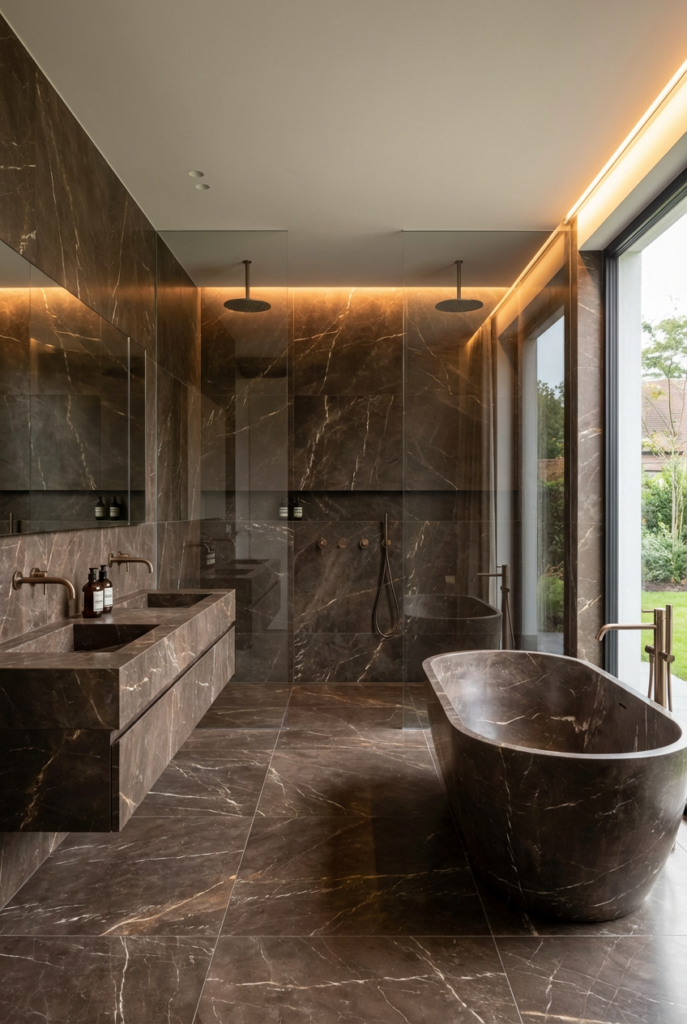
The vanity is often one of the most visible pieces of furniture in a bathroom.
A modern vanity can provide storage while also establishing the visual style of the room.
Popular vanity styles include:
- Floating vanities
- Wall-mounted cabinets
- Natural wood vanities
- Double-sink vanities
- Minimalist flat-panel cabinets
- Custom-built vanities
Floating Vanities
Floating vanities are particularly useful in contemporary bathrooms.
Because the cabinet is mounted above the floor, more of the flooring remains visible. This can create the impression that the bathroom is larger and more open.
The open area underneath can also make cleaning easier.
Double Vanities
A double vanity can be useful in a primary bathroom shared by two people.
It provides separate sinks and additional countertop and storage space.
However, a double vanity should not be forced into a bathroom that does not have enough room.
A properly proportioned single vanity can look much better than an oversized cabinet that makes the room difficult to navigate.
Upgrade to a Walk-In Shower
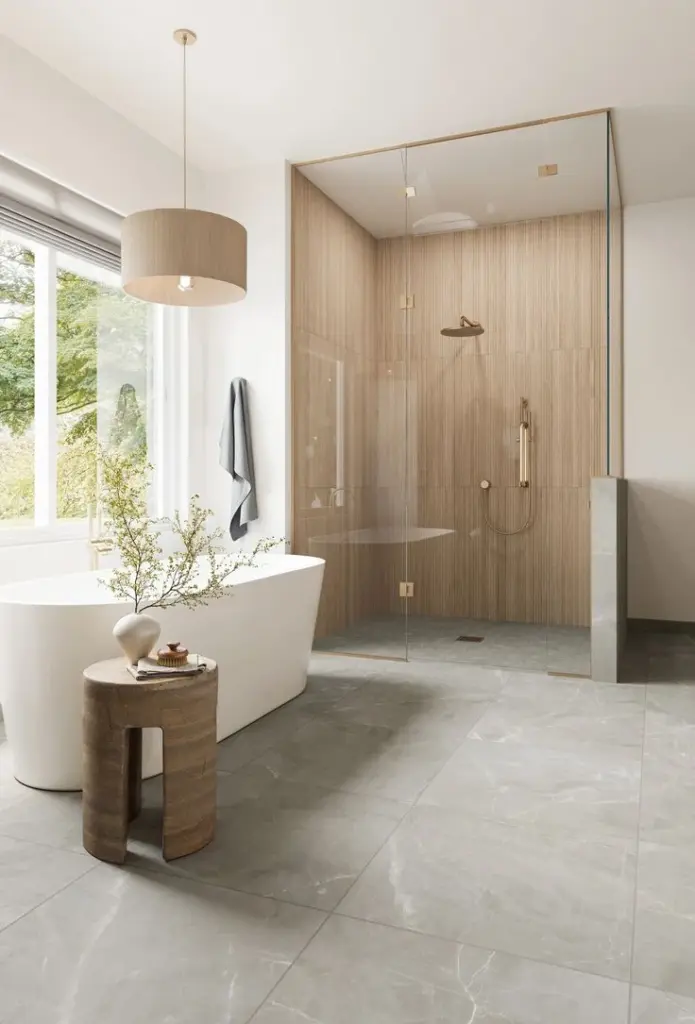
A walk-in shower is one of the most popular features in modern bathroom design.
Unlike traditional shower-and-tub combinations, a well-designed walk-in shower can create a cleaner and more open appearance.
Common features include:
- Frameless glass
- Large-format tile
- Rain showerheads
- Handheld showerheads
- Built-in niches
- Shower benches
- Linear drains
- Multiple shower controls
Frameless Glass
Frameless glass shower enclosures can make a bathroom feel more spacious because there are fewer visual barriers between the shower and the rest of the room.
Clear glass also allows decorative tile or natural stone inside the shower to become part of the overall design.
Built-In Shower Niches
A shower niche provides dedicated storage for shampoo, soap, and other products.
It can be built into the wall rather than using a hanging organizer.
When the niche is finished with contrasting tile or stone, it can also become a decorative feature.
Walk-In Shower Accessibility
A walk-in shower can also support long-term accessibility.
A low-threshold entry, handheld showerhead, built-in seating, grab-bar reinforcement, and non-slip flooring can make the bathroom easier to use as household needs change.
Accessibility features do not necessarily need to look institutional. Modern designs can integrate them into the overall architecture.
Consider a Freestanding Bathtub
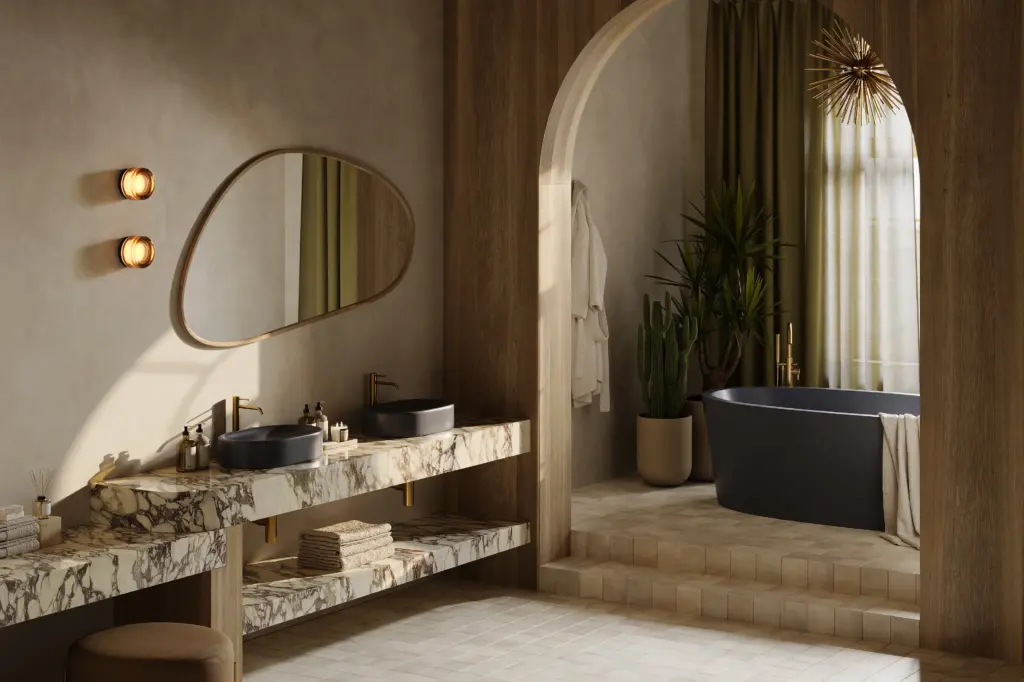
Freestanding bathtubs remain a popular feature in luxury bathroom design.
A sculptural tub can act as the focal point of a large primary bathroom.
Common styles include:
- Oval tubs
- Slipper tubs
- Contemporary acrylic tubs
- Stone tubs
- Traditional clawfoot designs
However, a bathtub should only be added if there is enough space to maintain comfortable circulation.
In a smaller bathroom, a high-quality walk-in shower may provide considerably more practical value than trying to squeeze in both a large shower and a freestanding tub.
For homeowners planning a renovation specifically for resale, the decision should also consider the expectations of buyers in the local market.
Use Large-Format Tile
Tile has a major influence on the appearance of a bathroom.
Large-format tiles have become increasingly popular because they can create a clean, contemporary appearance with fewer grout lines.
They can be used on:
- Shower walls
- Bathroom floors
- Feature walls
- Vanity walls
- Tub surrounds
Large tiles can also make a small bathroom appear more visually continuous.
However, installation requires careful planning because the walls and floors need to be appropriately prepared.
Natural Stone vs. Porcelain
Natural stone can provide a highly luxurious appearance, but maintenance requirements vary.
Marble, for example, has distinctive veining and can create an elegant bathroom, but it may require more care than some engineered or porcelain alternatives.
Porcelain tile can reproduce the appearance of stone, concrete, or wood while offering a wide variety of designs.
The best material depends on the budget, maintenance expectations, and desired aesthetic.
Create a Spa-Like Bathroom
One of the strongest trends in luxury bathroom design is creating a spa-like atmosphere.
This does not require turning the entire bathroom into a commercial spa.
Instead, focus on sensory details.
Consider:
- Warm lighting
- Natural materials
- Soft towels
- Minimal visual clutter
- Comfortable temperatures
- Quiet ventilation
- High-quality fixtures
- Natural textures
A calm color palette can also contribute to the atmosphere.
Warm white, beige, soft gray, natural wood, and stone can create a relaxing environment.
Improve Bathroom Lighting
Lighting can completely change the appearance and functionality of a bathroom.
A single ceiling fixture is rarely enough for a modern bathroom.
A better approach is to combine several layers of lighting.
Ambient Lighting
Ambient lighting provides general illumination.
Recessed fixtures, ceiling fixtures, or indirect lighting can be used depending on the room.
Vanity Lighting
Vanity lighting is particularly important because it affects how clearly people can see their faces.
Fixtures positioned near eye level can help reduce harsh shadows.
Accent Lighting
Accent lighting can highlight:
- Architectural details
- Shower walls
- Artwork
- Shelving
- Freestanding bathtubs
- Decorative tile
Under-Vanity Lighting
LED lighting beneath a floating vanity can create a subtle nighttime glow.
This can provide enough illumination to navigate the bathroom without turning on bright overhead lights.
Choose High-Quality Bathroom Fixtures
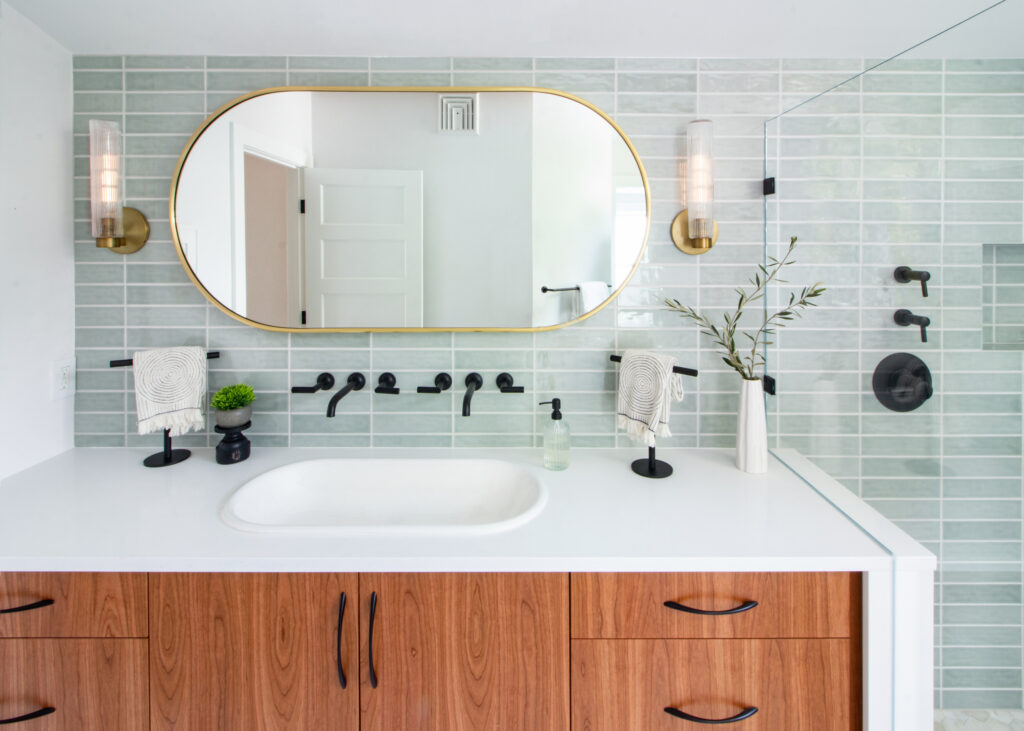
Faucets and shower fixtures may seem like relatively small details, but they can strongly influence the overall appearance of the bathroom.
Popular finishes include:
- Matte black
- Brushed nickel
- Chrome
- Brushed brass
- Polished brass
- Oil-rubbed bronze
The best approach is to coordinate the finishes rather than using a different metal for every fixture.
For example, matte black faucets, shower controls, cabinet hardware, and lighting can create a consistent contemporary appearance.
Alternatively, brushed brass can add warmth to a bathroom with natural wood and neutral tile.
Avoid Too Many Finishes
Using too many competing metals can make a bathroom feel visually chaotic.
Choose one primary finish and, if desired, one complementary accent.
Consistency generally produces a more professional result.
Add Better Bathroom Storage
Storage is essential in a bathroom.
Without adequate storage, countertops can quickly become covered with toiletries, cosmetics, towels, and personal items.
Modern bathroom storage solutions include:
- Vanity drawers
- Medicine cabinets
- Built-in shelving
- Linen cabinets
- Shower niches
- Recessed storage
- Wall-mounted cabinets
Recessed Medicine Cabinets
A recessed medicine cabinet can provide useful storage without projecting far into the room.
Some modern models combine mirrors with integrated lighting and electrical outlets.
This can eliminate the need for several separate fixtures.
Install Heated Bathroom Floors
Heated floors can add a luxury element while making the bathroom more comfortable.
Radiant floor heating systems can be installed beneath certain flooring materials.
They are particularly appealing in colder climates where tile floors can feel uncomfortable during winter.
However, installation costs and energy use should be considered before adding heated flooring.
If the bathroom is already being renovated and the flooring is being removed, it may be easier to evaluate radiant heating as part of the overall project.
Upgrade the Bathroom Ventilation
Ventilation is one of the least glamorous parts of bathroom remodeling, but it is extremely important.
Bathrooms generate significant moisture from showers and baths.
Poor ventilation can contribute to:
- Condensation
- Mold
- Mildew
- Paint damage
- Wood damage
- Unpleasant odors
A properly sized exhaust fan can help remove moisture from the room.
For a luxury renovation, consider selecting a quiet ventilation system so the bathroom remains comfortable without excessive noise.
Use Mirrors as a Design Feature
A bathroom mirror is both functional and decorative.
Instead of choosing a basic rectangular mirror, consider designs that complement the architecture of the room.
Options include:
- Rounded mirrors
- Arched mirrors
- Backlit mirrors
- Frameless mirrors
- Oversized mirrors
- Custom-shaped mirrors
Backlit mirrors can provide soft illumination while creating a contemporary appearance.
A large mirror can also make a smaller bathroom feel more spacious by reflecting light.
Consider Smart Bathroom Technology
Smart technology is increasingly becoming part of modern luxury homes.
Bathroom technology can include:
- Smart mirrors
- Digital shower controls
- Heated toilet seats
- Bidet systems
- Automatic faucets
- Smart ventilation
- Motion-activated lighting
- Waterproof speakers
Digital shower controls can allow users to set temperature and water preferences.
Smart toilets and bidet systems can provide features such as heated seats, automatic flushing, integrated washing, and air drying.
These features can be expensive, so homeowners should consider whether the convenience justifies the additional cost.
Improve Water Efficiency
Bathroom remodeling is also an opportunity to reduce water consumption.
Modern plumbing fixtures can provide efficient performance without necessarily sacrificing comfort.
Potential upgrades include:
- Water-efficient toilets
- Low-flow showerheads
- Efficient faucets
- Automatic shutoff faucets
- Leak detection systems
Reducing water consumption can lower utility costs over time.
It can also be an important consideration for homeowners interested in environmentally responsible home design.
Create a Luxury Shower Experience
The shower can become one of the most impressive features of a modern bathroom.
A luxury shower might include:
- Rainfall showerhead
- Handheld shower
- Multiple body sprays
- Built-in bench
- Steam system
- Frameless glass
- Recessed lighting
- Heated surfaces
- Multiple shower controls
However, more features do not automatically create a better shower.
The system should be designed around the available water pressure, plumbing capacity, space, and homeowner preferences.
A beautifully designed shower with one high-quality showerhead may be more practical than an unnecessarily complicated system.
Select the Right Bathroom Color Palette
Color has a major influence on how a bathroom feels.
Neutral colors remain popular because they are versatile and tend to age well.
Popular combinations include:
Warm Neutral
Cream, beige, natural wood, and brushed brass.
Contemporary
White, light gray, black, and natural stone.
Dark Luxury
Charcoal, black, dark wood, and warm metallic accents.
Natural Spa
Soft beige, stone, muted green, and natural wood.
For smaller bathrooms, lighter colors can help maintain an open appearance.
Dark colors can also work in small bathrooms, but they require thoughtful lighting to prevent the space from feeling enclosed.
Make a Small Bathroom Feel Larger
Not every home has a large primary bathroom.
Fortunately, several design techniques can make a small bathroom feel more spacious.
Use Large Mirrors
A large mirror can visually expand the room.
Minimize Visual Barriers
Clear glass shower panels can help maintain an open sightline.
Use Consistent Flooring
Using similar materials across connected areas can reduce visual interruptions.
Choose a Floating Vanity
A floating vanity exposes more floor area and can make the bathroom appear less crowded.
Improve Lighting
A combination of ceiling, vanity, and accent lighting can make a small room feel brighter.
Don’t Forget the Toilet Area
The toilet may not be the most visually exciting feature, but its position matters.
If possible, avoid making the toilet the first thing someone sees when entering the bathroom.
A partial wall, vanity, architectural feature, or carefully positioned doorway can provide more privacy.
Wall-mounted toilets can also create a more contemporary appearance and make cleaning around the base easier.
However, they can require more complex installation depending on the existing plumbing and wall structure.
How Much Does a Bathroom Remodel Cost?
Bathroom remodeling costs can vary dramatically.
A simple cosmetic update may involve paint, lighting, fixtures, and hardware and cost substantially less than a complete renovation.
A major bathroom remodel may involve:
- New plumbing
- Electrical work
- New flooring
- Shower construction
- Waterproofing
- Custom cabinetry
- New fixtures
- Tile installation
- Lighting
- Ventilation
- Permits
The size of the bathroom also matters.
However, the amount of plumbing work and quality of materials can have an even greater effect on the final cost.
When planning a bathroom renovation budget, obtain multiple detailed estimates rather than relying on a generic online calculator.
Ask contractors to separate labor, materials, demolition, permits, and other costs.
Where to Spend More on a Bathroom Remodel
Not every component deserves the same portion of the budget.
It can make sense to prioritize:
Waterproofing:
Proper waterproofing is essential because hidden moisture problems can cause expensive damage.
Plumbing:
Reliable plumbing is more important than decorative fixtures.
Lighting:
Good lighting improves both functionality and appearance.
Ventilation:
Adequate ventilation protects the bathroom from excessive moisture.
Quality Tile Installation:
Even expensive tile can look poor when installation is rushed or improperly executed.
Cabinetry:
Durable bathroom storage can provide years of daily use.
Where You Can Save Money
There are also areas where homeowners may be able to reduce costs.
Keep the Existing Plumbing Layout
Avoiding major plumbing relocation can reduce labor and construction requirements.
Use Porcelain Instead of Natural Stone
High-quality porcelain can provide a luxury appearance at a potentially lower cost and may require less maintenance than certain natural stones.
Upgrade Fixtures Without Moving Them
Replacing faucets, shower hardware, mirrors, lighting, and vanities can significantly change the appearance without changing the room’s basic layout.
Renovate in Stages
If the budget does not allow a complete renovation, improvements can sometimes be completed in phases.
Common Bathroom Remodeling Mistakes
Choosing Appearance Over Waterproofing
A beautiful shower is worthless if water can penetrate behind the walls.
Waterproofing should be treated as a fundamental part of the project.
Poor Ventilation
A luxury bathroom with inadequate ventilation can develop moisture-related problems.
Insufficient Storage
Without enough storage, even a beautiful bathroom can quickly become cluttered.
Overcrowding the Room
Trying to fit too many luxury features into a small space can make the bathroom less comfortable.
Ignoring Maintenance
Some premium materials require more maintenance than homeowners expect.
Understand cleaning and sealing requirements before selecting materials.
Changing Too Many Things at Once
A complete redesign can be expensive.
If the existing layout works well, consider whether a targeted renovation could achieve the desired result without unnecessary structural work.
How to Increase Bathroom Appeal for Resale
If you are remodeling primarily to prepare a property for sale, focus on improvements with broad appeal.
Neutral colors, modern fixtures, good lighting, attractive tile, practical storage, and a clean shower design are generally easier for buyers to appreciate than highly personalized features.
Avoid spending excessively on features that may not be valued by the local market.
For example, a high-end spa bathroom may be appropriate for a luxury property, but it may be difficult to justify in a modest home.
The renovation should be consistent with the quality and price range of the surrounding properties.
Final Thoughts
The best bathroom remodeling ideas combine functionality, comfort, durability, and visual appeal.
A modern bathroom does not need to contain every luxury feature available. A well-planned walk-in shower, attractive vanity, high-quality lighting, practical storage, durable materials, and effective ventilation can make a much bigger difference than simply adding expensive accessories.
Start with the layout and the underlying infrastructure. Then choose materials, fixtures, lighting, and technology that support the way the bathroom will actually be used.
If resale value is important, keep the design relatively timeless and avoid over-improving the property for its neighborhood.
If the bathroom is primarily for personal enjoyment, you have more freedom to incorporate features that match your lifestyle, whether that means a spa-style shower, heated floors, smart technology, or a relaxing freestanding bathtub.
Ultimately, a successful bathroom renovation is not defined by how much money is spent. It is defined by how effectively the space combines good design, reliable construction, comfortable functionality, and lasting visual appeal.