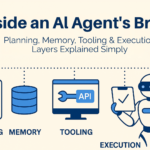
TL;DR: AI agents are currently navigating the “trough of disillusionment.” While the hype suggests they can replace entire departments overnight, the reality is more nuanced: agents excel at modular, verifiable tasks, not broad “magical” problem-solving. Success in 2026 isn’t about finding a god-like AI; it is about building autonomous loops that can self-verify and scale within narrow, well-defined boundaries.
The Hype vs. The Reality
If you follow the current discourse on X, you will encounter two extremes: those who believe AI agents are already autonomous employees, and those who argue they are just fancy chatbots with better marketing.
The truth is that both sides miss the point. The “hype” surrounds the autonomy—the idea that you can walk away and an agent will finish the job. The reality is that autonomy is a spectrum, not a binary state. Agents are currently overhyped when deployed as “black-box” solutions, but they are vastly undervalued when treated as modular, verifiable reasoning engines.
Why Agents Fail (The “Ralph Wiggum” Loop)
Most agents fail because they lack what engineers call a “hard gate.” They operate in a dream-state where they believe their own output is correct. Without a programmatic verification step—a unit test, a budget cap, or a secondary “judge” agent—an agent will happily spin in circles, burning through your API credits while producing nothing of value.
If your AI agent is just “chatting” its way through a workflow, it is not an agent; it is an expensive autocomplete tool.
The 4 Pillars of a Real AI Agent
To move past the hype, you must build agents that satisfy these four conditions:
- Objective Exit Criteria: You must define what “done” looks like before the agent starts. If the goal is subjective (e.g., “make this look cool”), an agent will struggle. If the goal is objective (e.g., “increase Lighthouse score to 90”), the agent can iterate until success.
- External Connectivity: A true agent must have “hands.” It needs to interact with your CMS, your email, your calendar, or your database. An agent trapped in a chat window is a calculator, not an agent.
- Stateful Memory: It must remember what it has already tried. If it repeats the same failed approach in loop three that it tried in loop one, your system architecture is broken.
- Adversarial Review: The agent that does the work should not be the agent that grades the work. Splitting these roles is the single most effective way to guarantee quality.
When to Stop Building
Not every task is an agent task. If you are tempted to build an agent loop for a one-off task, don’t. The setup cost and the mental overhead of building the “loop” will far exceed the time saved by a single, well-crafted prompt.
Agents are for recurring work. If you do it weekly, automate it. If you do it once, prompt it.
The Future: From “Agents” to “Infrastructure”
In 2026, we are moving away from the term “AI Agent” and toward “Autonomous Infrastructure.”
The winning strategy for businesses this year isn’t to hire an “AI Agent Consultant” to build a generic bot. It is to take your existing, high-friction workflows—like triaging customer bugs, generating SEO briefs, or analyzing financial data—and wrapping them in autonomous loops.
You do not need a smarter AI; you need a more disciplined system.
Conclusion: Are they overhyped?
Yes, if you expect them to replace human intuition. No, if you expect them to replace human manual labor on predictable, high-volume tasks. Stop looking for the “perfect” agent and start building the “perfect” loop.